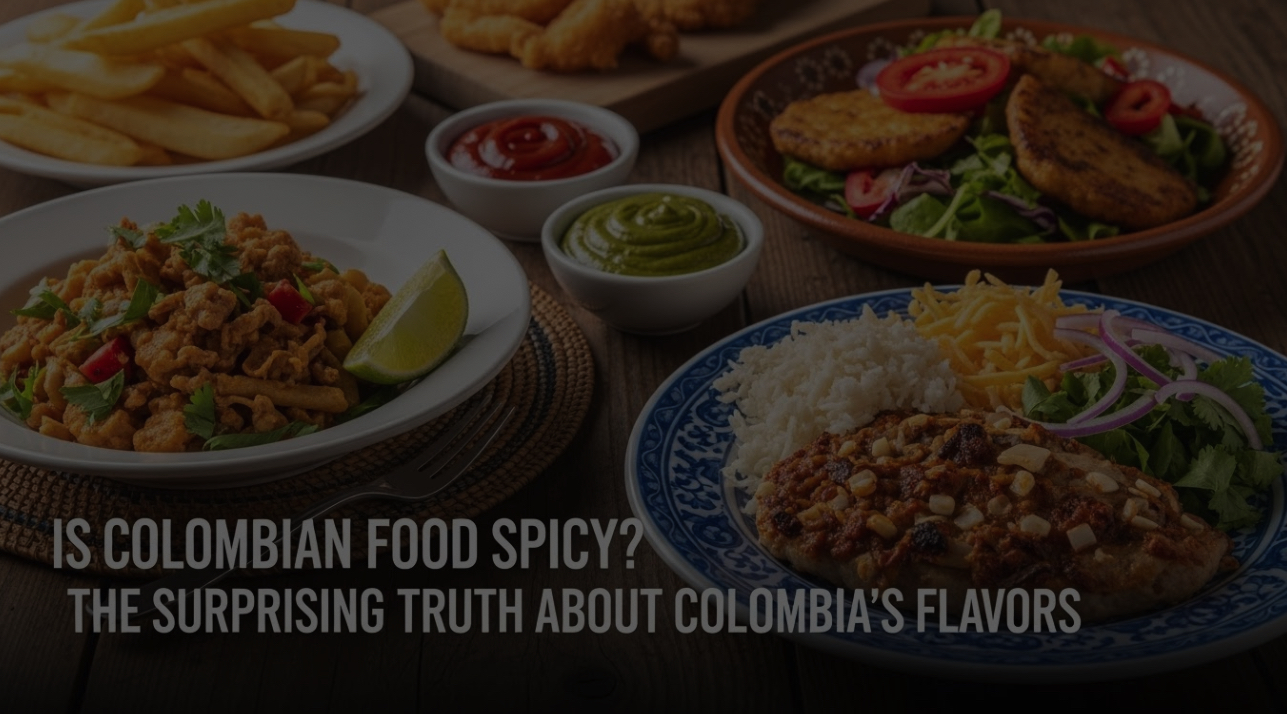
If you have ever traveled through Latin America—or watched enough travel food videos online—you might expect Colombian cuisine to be packed with fiery chilies, bold heat, and intense spice. After all, several Latin American countries, especially Mexico and Peru, are known for their love of chili peppers. It is easy to assume Colombia follows the same pattern.
But the truth is far more interesting.
Despite its vibrant culture, tropical climates, and incredible regional diversity, Colombian cuisine is not spicy. In fact, one of the most surprising things for first-time visitors is how mild the food is. You will taste richness, depth, and warmth, but very little heat. Instead of burning spices, Colombian dishes express their flavor through fresh herbs, slow-cooked broths, indigenous ingredients, and a deep respect for natural taste.
Yet this does not mean Colombian cuisine ignores spice altogether. The difference lies in how Colombians approach heat. Rather than cooking with chilies inside the dish, Colombians allow each diner to control their own level of spice using a fresh condiment called ají—a zesty, herb-forward, chili-based table sauce that transforms any meal with a personal touch.
In this long, in-depth guide, we will explore this culinary philosophy from every angle. From Colombia’s history and geography to its beloved dishes and food culture, you will learn exactly why Colombian food tastes the way it does—and why this gentle approach to heat makes the cuisine so unique.
A Cuisine of Flavor, Not Fire
To understand the Colombian approach to seasoning, imagine sitting down in a traditional restaurant in Bogotá, Medellín, or Cali. You order a classic dish like Ajiaco, Bandeja Paisa, or Sancocho. What arrives at your table is beautifully aromatic, nourishing, and comforting. But it will not be spicy.
Instead, the depth comes from:
- a base of sautéed aromatics, called sofrito, made with tomatoes, onions, garlic, and sometimes sweet bell peppers
- fresh herbs like cilantro or regional herbs such as guascas
- long, slow cooking techniques that allow flavors to develop naturally
- and native ingredients like corn, potatoes, yuca, plantains, and beans
Colombian chefs—and home cooks—care deeply about the quality of these ingredients. They want you to taste the tenderness of the meat, the creaminess of the potatoes, the sweetness of ripe plantains, and the earthiness of corn. Overpowering any of these elements with heavy chili heat would be considered a mistake, because it would mask the soul of the dish.
Instead of building spice into the recipe, Colombians build flavor. Then, if you personally want heat, you are completely free to add it at the table.

Why Colombian Food Is Not Spicy: A Cultural and Historical Perspective
If you want to understand why Colombian cooking avoids built-in spiciness, you must look at several factors: the country’s indigenous traditions, the Spanish colonial influence, and the incredible regional diversity that still shapes Colombian food today.
1. Indigenous Cooking Prioritized Natural Flavor Over Heat
Long before the Spanish arrived, Colombia was home to many indigenous groups, each with its own food culture. These communities grew crops such as corn, cassava (yuca), beans, potatoes, and plantains. They also consumed a wide range of river fish, game, and fruits that are still part of the Colombian diet today.
While chili peppers did exist in the region, indigenous Colombian cooking did not treat them as central ingredients. Archaeological evidence shows that peppers were used, but not in the same quantities or daily applications seen in places like Mexico. Instead, meals centered around hearty, nourishing staples—mild, filling, and flavorful.
This focus on whole, natural ingredients became the foundation of the cuisine that followed.
2. The Spanish Introduced New Ingredients but Not Spicy Cooking
Spanish colonization brought livestock, rice, wheat, and new cooking techniques. The Spanish culinary style favored:
- slow-cooked stews,
- mild broth-based soups,
- and richly seasoned meats without chili heat.
When blended with indigenous ingredients, these traditions developed into iconic Colombian dishes like Sancocho and Ajiaco, which rely on slow simmering rather than strong spices.
The fusion of these two worlds helped create a national palate that emphasized comfort over heat, depth over intensity, and slow cooking over flame.
3. Colombia’s Regional Variety Prevented a Single “Spicy Profile”
Colombia is frequently described as a country of many micro-cultures. Its landscapes include mountains, jungles, coasts, plains, and islands. Each region developed its own culinary identity.
The Andean Region (Bogotá, Medellín, Boyacá)
Cold mountain climates encouraged hearty meals such as Ajiaco, Calentado, Changua, and Bandeja Paisa. These foods rely on warmth and sustenance, not spice.
The Caribbean Coast (Cartagena, Santa Marta, Barranquilla)
Here, the cuisine includes fresh seafood, coconut milk, and fried plantains. The flavors are savory with a hint of sweetness, but rarely spicy.
The Pacific Coast (Chocó, Buenaventura)
This region has African influences and uses more herbs and sometimes a touch of local chilies, but the heat remains modest.
The Amazon Region
Indigenous groups use unique fruits, roots, and occasionally local wild peppers, but these dishes remain the exception rather than the norm.
Because each region developed independently, no unified spicy national cuisine ever formed.

Ají: The Secret to Personalizing Your Spice Level
If Colombian food itself is not spicy, you might wonder how people who enjoy heat add it. The answer is simple: ají, the beloved homemade condiment placed on nearly every table.
Ají is not like bottled hot sauce. It is a fresh salsa, typically prepared daily. The classic recipe includes:
- finely chopped chili peppers (often the small, extremely hot ají pajarito)
- white or green onions
- lots of fresh cilantro
- lime juice or vinegar
- a little water
- salt
This mixture creates a condiment that is:
- spicy, but clean and bright
- herbal, not heavy
- customizable, because it can be made mild, medium, or fiery depending on the chilies used
Instead of imposing heat on everyone, ají gives each diner full control.
If you want your soup spicy, add a spoonful.
If you want your empanada to burn, add more.
If you prefer your meal mild, simply skip it.
It is a perfect, democratic system that respects the integrity of the dish and the preferences of every guest.
Iconic Colombian Dishes That Are Not Spicy
To fully appreciate Colombia’s culinary identity, you must know its most iconic dishes. These classics showcase why the cuisine focuses on richness rather than heat.
1. Bandeja Paisa
Perhaps the most famous Colombian dish, Bandeja Paisa is a generous platter originating from the Paisa region. A traditional serving often includes:
- grilled steak or ground beef
- red beans
- rice
- chicharrón (crispy pork belly)
- chorizo
- plantain
- avocado
- a fried egg
- and a small arepa
Despite having spicy-sounding components like chorizo, the dish is entirely mild and centered on savory flavors.
2. Ajiaco
Ajiaco is Bogotá’s signature soup. It is thick, comforting, and deeply flavorful. Its defining features include:
- three native potato varieties (which thicken the broth naturally)
- shredded chicken
- the herb guascas, which adds an earthy, aromatic note
- cream, capers, and avocado served on the side
None of these ingredients add heat, making Ajiaco one of Colombia’s most soothing dishes.
3. Sancocho
Sancocho is a rustic stew enjoyed across the country, with variations depending on the region. It usually includes:
- large cuts of chicken, beef, pork, or fish
- potatoes
- corn on the cob
- plantain
- yuca
The broth is savory and hearty, but never spicy.
4. Traditional Colombian Breakfasts
Colombian breakfasts are famously comforting. Common options include:
- Arepas with cheese
- Huevos pericos (eggs with tomatoes and scallions)
- Calentado (rice and beans reheated with new seasoning)
- Changua, a milk-based egg soup
Again, the flavors remain mild and comforting.

Are There Any Spicy Colombian Dishes?
Yes—but they are the exception, not the rule.
Pacific Coast Dishes
Some dishes from the Pacific region include small amounts of local chilies.
Southwest Dishes (Cauca region)
Popayán is known for its ají de maní, a spicy peanut sauce served with empanadas.
Amazonian Foods
Certain indigenous preparations use wild peppers not found elsewhere.
Even in these regions, the heat levels usually remain moderate.
Frequently Asked Questions
Is Colombian food spicy?
No. Colombian dishes are traditionally mild and savory. Spice is added at the table using ají.
Why isn’t Colombian food spicy?
It reflects indigenous traditions, Spanish influence, and a national preference for highlighting natural flavors instead of using intense chili heat.
What exactly is ají?
Ají is a fresh, zesty salsa made from chili peppers, cilantro, onions, lime, and salt. It lets each diner control their own spice level.
What is a typical Colombian breakfast?
Arepas, cheese, eggs, hot chocolate, and hearty dishes like calentado are common.

Conclusion: A Cuisine Built on Comfort and Personal Choice
So, is Colombian food spicy? The answer remains a clear and simple no—at least, not unless you want it to be.
Colombian cuisine is centered on comfort, nourishment, and authenticity. Instead of overwhelming heat, it showcases:
- the warmth of potatoes and stews
- the sweetness of plantains
- the richness of slow-cooked meats
- the brightness of fresh herbs
- and the diversity of the country’s landscapes
By keeping the dishes mild and offering ají as a customizable condiment, Colombian cuisine invites each person to tailor their own dining experience. It is a warm, welcoming system that honors tradition while giving freedom to every diner.
If you want spice, you can add it.
If you want mild flavors, you can enjoy them as they are.
Colombia’s food offers the best of both worlds: richness without pressure, flavor without fire, and comfort that you can personalize with every bite.
Let the cuisine speak for itself—and let the ají guide your heat.