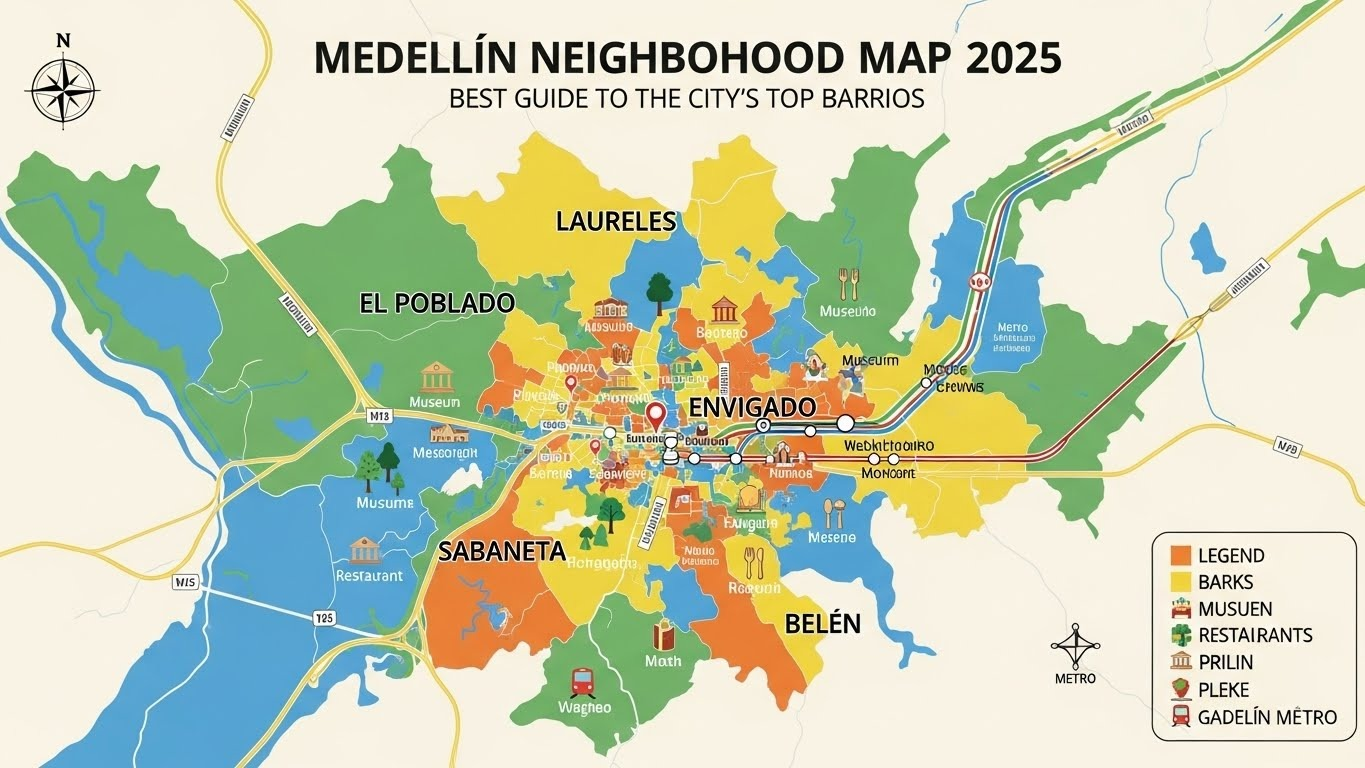
Medellín is a city that captures the imagination long before a traveler touches down in the valley. Set among lush mountains and blessed with eternal spring-like weather, it has become one of Latin America’s most dynamic destinations. Yet for all its beauty and energy, one thing often confuses newcomers more than anything else: its neighborhoods. Medellín is a patchwork of contrasting areas, each with its own identity, rhythm, atmosphere, and level of development.
Navigating this city becomes infinitely easier when you understand its unique layout—how neighborhoods are structured, why certain districts feel more modern than others, and how the socio-economic system known as estratos shapes everything from safety to prices.
This guide serves as a full, comprehensive overview of Medellín’s neighborhoods, helping you understand where to stay, what to expect, and how to choose the perfect barrio based on your travel style. It dives into the city’s most popular areas—El Poblado, Laureles, Envigado, and Sabaneta—while also clarifying Medellín’s safety dynamics, lifestyle differences, and cultural nuances.
Whether you are a first-time visitor, an aspiring digital nomad, a long-term traveler, or simply curious about how Medellín is organized, this article gives you everything you need in clear, elegant, and fully developed sentences.
Understanding Medellín’s Layout: Two Concepts Everyone Must Know
Before you start comparing maps or planning your accommodation, it’s essential to understand the two elements that define Medellín’s urban experience:
- The Estratos System
- The Reality of Safety—Past and Present
These two ideas guide almost every conversation about where to live, where to stay, and how the city feels on the ground.
1. The Estratos System: Medellín’s Urban DNA
If you spend even a short time in Medellín, you will hear people refer to neighborhoods by their estrato. Locals and foreigners alike throw around phrases such as “That’s an estrato 6 area,” or “You can find cheaper rent in estrato 3.”
But what does estrato actually mean?
Colombia uses a socio-economic classification system that divides all residential neighborhoods into six groups:
- Estrato 1: Lowest income
- Estrato 2: Low income
- Estrato 3: Lower-middle income
- Estrato 4: Middle class
- Estrato 5: Upper-middle class
- Estrato 6: Highest income
This framework was originally created so that wealthier households could pay slightly higher utility rates, helping subsidize lower-income areas. While that remains its official purpose, the system has naturally become a shorthand way of describing a neighborhood’s general character.
Why Estratos Matter for Travelers
Understanding estratos gives instant clarity on several important aspects:
Cost of Living
Prices rise dramatically as the estrato level goes up. A coffee, a meal, or an Airbnb in an estrato 6 neighborhood like El Poblado will cost noticeably more than the same items in an estrato 3 or 4 area like Belén.
Infrastructure & Amenities
Higher estratos usually have better-maintained streets, more green spaces, newer buildings, and a larger presence of cafes, restaurants, boutiques, supermarkets, and bilingual services.
Perceived Safety
While no place is completely immune to crime, the majority of tourist-friendly and expat-heavy districts fall within estratos 5 and 6. These areas enjoy more frequent police patrols, stronger lighting, and a greater density of residential towers with private security.
Knowing a neighborhood’s estrato is like knowing a city’s unwritten code. It gives you context for prices, ambiance, and the general experience you can expect.
2. A Practical, Realistic Understanding of Safety
Medellín’s transformation from its infamous past to the vibrant city it is today is often described as one of the most remarkable urban turnarounds in recent history. However, it is still a large Latin American city, and like any metropolis, it requires some common-sense precautions.
A mental “safety map” does not need to be fear-based—it simply helps you move around confidently and make smart decisions.
Core Safety Guidelines
Here are the general principles locals live by:
“No Dar Papaya”
This famous Colombian expression literally means “don’t give papaya,” but figuratively, it means don’t make yourself an easy target.
Avoid displaying expensive jewelry, holding your smartphone out in quiet areas, or carrying unnecessary cash.
Stick to the Well-Known Neighborhoods
El Poblado, Laureles, Envigado, and Sabaneta are widely considered safe for walking during the day and in busy, well-lit parts at night.
Use Ride-Share Apps at Night
The Metro is excellent and safe in the daytime, but most travelers prefer apps like Uber or DiDi after dark—especially when moving between distant neighborhoods.
Visit El Centro During the Day Only
Downtown Medellín is packed with culture, history, and essential landmarks. It is safe to explore during the day with reasonable caution, but wandering at night is generally discouraged.
Follow Your Instincts
If something feels uncomfortable—whether it’s a street or a situation—trust your intuition and return to a busier area.
With these precautions in mind, Medellín becomes a city that is easy to enjoy and rewarding to explore.

The Best Neighborhoods in Medellín
Now that the basics are clear, let’s walk through the four main areas travelers consider when choosing where to stay. Each one has a unique personality, and your ideal choice depends on your interests, budget, and lifestyle.
1. El Poblado: Medellín’s Modern, Luxurious, and High-Energy Hub
El Poblado is the neighborhood most people imagine when they think of Medellín. It is modern, hilly, green, and filled with high-rises, boutique hotels, fine dining, international crowds, and vibrant nightlife.
If you look at an El Poblado map, you will find the city’s most famous restaurants, bars, malls, and services clustered in this area.
The Atmosphere & Who It Suits
El Poblado is elegant, cosmopolitan, and consistently buzzing with activity. It is the best choice for:
- First-time visitors
- Luxury travelers
- People who enjoy nightlife and dining
- Anyone who wants convenience and comfort
- Visitors who prioritize safety and modern amenities
Key Sectors in El Poblado
Provenza
The stylish heart of nightlife and gastronomy. Tree-lined streets, cocktail bars, rooftop lounges, and renowned restaurants create a lively yet upscale environment.
Parque Lleras
Once the main party zone, now a mix of clubs, bars, and hostels. It is slightly more chaotic than Provenza but remains popular with younger travelers.
Manila
A charming, quieter pocket with excellent cafes, brunch spots, and independent restaurants. Ideal for those who want Poblado’s convenience without its high intensity.
The Golden Mile (Milla de Oro)
The financial district filled with shopping malls, corporate offices, and business hotels. Convenient, polished, and modern.
Strengths of El Poblado
- High perceived safety
- Extremely convenient amenities
- Great walkability in flat zones
- Number-one area for food and nightlife
Drawbacks
- Most expensive neighborhood in the city
- Steep hills outside the flat zones
- Heavy traffic during busy hours
- Feels less authentically Colombian
- Tourist concentration can feel overwhelming
Things to Do in El Poblado
- Spend the afternoon café-hopping in Provenza
- Walk through Parque El Poblado for people-watching
- Visit the charming Museo El Castillo
- Enjoy a food tour featuring gourmet Colombian dishes
- Shop in premium malls like Santa Fe, Oviedo, and El Tesoro
Where to Stay
El Poblado has it all—luxury hotels, boutique residences, serviced apartments, and lively hostels. Options span every type of traveler.

2. Laureles-Estadio: Medellín’s Local, Comfortable, and Highly Livable Gem
Laureles is often described as the soul of everyday Medellín life. Known for its circular street layout and leafy avenues, this area has become especially popular among digital nomads, long-term visitors, and travelers who prefer an authentic Colombian atmosphere.
It offers a calmer, flatter, and more residential environment compared to El Poblado’s fast-paced energy.
The Atmosphere & Who It Suits
Laureles feels friendly, relaxed, and deeply local. It is ideal for:
- Digital nomads
- Long-term travelers
- Budget-conscious visitors
- People seeking authenticity
- Fans of local cuisine and salsa music
Notable Sectors in Laureles
Laureles (near UPB)
The core of the neighborhood—well-planned, green, and filled with cafes, bakeries, restaurants, and quiet streets.
Estadio
Home to the massive Atanasio Girardot sports complex, lively nightlife, and a more working-class local vibe.
La 70 (La Setenta)
A vibrant street filled with bars, fondas, salsa venues, and restaurants. This is Medellín’s hotspot for traditional nightlife.
Avenida Nutibara
A major avenue full of shops and eateries, perfect for dining and strolling.
Strengths
- More authentic than Poblado
- Almost completely flat—great for walking and biking
- Much more affordable
- Lush, green, and peaceful
- Excellent coffee culture and Colombian cuisine
Limitations
- Less English spoken than in El Poblado
- Nightlife is more local than international
- Fewer upscale hotels and luxury dining options
Things to Do in Laureles-Estadio
- Attend a football match at the stadium
- Take salsa classes and dance on La 70
- Relax in the leafy parks and circular avenues
- Try local favorites like arepas, bandeja paisa, and specialty coffee
- Visit Cerro Nutibara and the charming Pueblito Paisa
Where to Stay
Laureles is known for its excellent long-term rentals and Airbnbs. There are also several mid-range hotels and a growing number of boutique properties.
3. Envigado: The Safe, Family-Friendly, and Traditional Escape
Just south of El Poblado, Envigado is technically a separate city, but in daily life it feels like a calm extension of Medellín. It is widely recognized as one of the safest areas in the entire valley and has a warm, small-town feeling despite being part of the larger metropolis.
The Atmosphere & Who It Suits
Envigado offers a peaceful, community-focused lifestyle. It is best for:
- Families
- Long-term visitors
- Travelers seeking tradition over tourism
- People who prefer a slower pace
Important Areas in Envigado
Parque Envigado
The main square, filled with traditional architecture, local restaurants, and pleasant outdoor cafés.
Calle de la Buena Mesa
A dining district packed with excellent restaurants and diverse culinary offerings.
Jardines & Zúñiga
Quiet, leafy neighborhoods with modern apartments and a very residential feel.
Strengths of Envigado
- One of the safest municipalities in Colombia
- Friendly, community-based atmosphere
- Excellent local food
- Lower cost of living
- Authentic Colombian culture
Limitations
- Not as well connected for tourists
- Very quiet nightlife
- Limited hotels and tourist services
Things to Do in Envigado
- Enjoy Plaza Envigado’s classic town atmosphere
- Try local cuisine along Calle de la Buena Mesa
- Visit the historic Casa Museo Otraparte
- Hike in the lush El Salado ecological park
- Experience spectacular holiday lights during December
Where to Stay
Envigado’s accommodation options are almost entirely composed of apartments and Airbnbs, making it ideal for extended stays.

4. Sabaneta: A Small-Town Feel with Big-City Access
Located further south, Sabaneta is the smallest municipality in Colombia, yet its charm makes it feel full of life. It has become increasingly popular among travelers who want affordability, safety, and authenticity without the rush of more touristy zones.
The Atmosphere & Who It Suits
Sabaneta is friendly, relaxed, and deeply rooted in tradition. It appeals to:
- Budget travelers
- Long-term residents
- People seeking a peaceful lifestyle
- Visitors who prefer cultural immersion
Strengths
- Very safe, with a strong sense of community
- Extremely affordable living
- Direct Metro access
- Rich cultural and street-food scene
Limitations
- Farther from the city center
- Limited nightlife
- Few hotels or tourist-focused businesses
Things to Do in Sabaneta
- Eat incredible street food around Parque Sabaneta
- Visit La Doctora, a beloved traditional fonda
- Shop at the spacious Mayorca Mega Plaza mall
- Explore the beautiful town church
Where to Stay
Sabaneta offers excellent long-term apartments on Airbnb, many of which provide outstanding value.
Choosing by Theme: Quick Neighborhood Maps
Medellín Nightlife Map
- Upscale Cocktails & Trendy Spots: Provenza (El Poblado)
- Authentic Salsa & Local Vibes: La 70 (Laureles-Estadio)
- Larger Clubs & Dance Venues: Parque Lleras (El Poblado)
- Relaxed Drinks in a Town Square: Parque Envigado or Parque Sabaneta
Common-Sense Medellín Safety Map
Green Zones (Safest & Most Comfortable):
- El Poblado
- Laureles
- Envigado
- Sabaneta
Yellow Zone (Use Extra Awareness):
- El Centro (Safe during the day, best avoided at night)
Red Zones (Generally Avoid):
- Outlying comunas in the hills that are not tourist-friendly
Conclusion:
Medellín is a city of contrasts, but those contrasts create its charm. Whether you prefer the luxury and convenience of El Poblado, the authenticity of Laureles, the tranquility of Envigado, or the traditional warmth of Sabaneta, there is a neighborhood suited to every lifestyle and traveler. Understanding the estratos system and staying aware of your surroundings will help you enjoy the city with confidence.
As you explore Medellín’s diverse barrios, you will begin to appreciate how each part contributes to the city’s unique identity. The vibrant nightlife, warm hospitality, excellent cuisine, and rich cultural life make Medellín a city where visitors often arrive for a short stay but end up returning again and again.