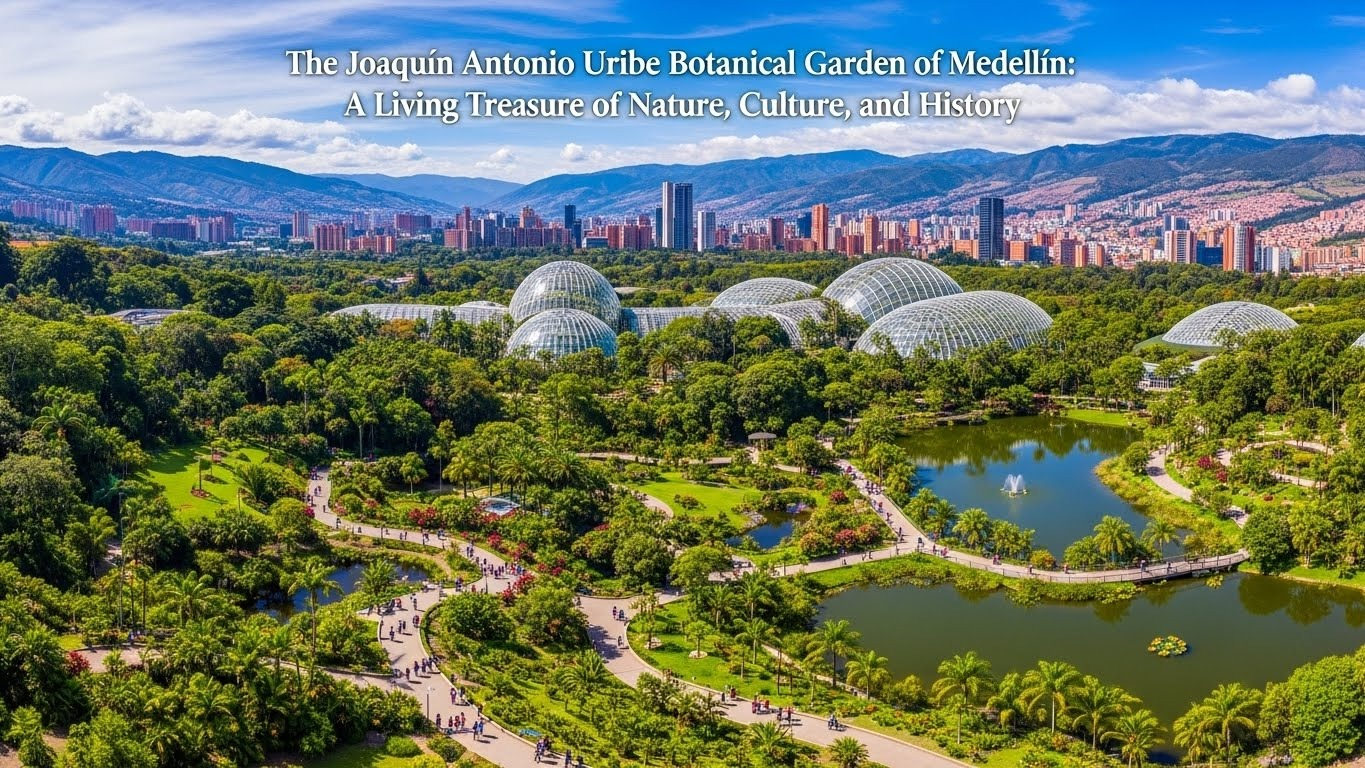
The Joaquín Antonio Uribe Botanical Garden of Medellín, more commonly known as the Botanical Garden of Medellín, stands as one of the most important green spaces in Colombia’s second-largest city. Located in the heart of Medellín, this 14-hectare botanical garden is far more than a collection of plants. It is a place where nature, architecture, history, science, and community life come together in harmony.
For visitors, the garden offers a peaceful escape from the urban environment. For researchers and conservationists, it serves as a vital center for biodiversity preservation. For locals, it is a symbol of Medellín’s transformation into a greener, more sustainable city. Over the decades, the Botanical Garden has evolved from a private farm into one of the city’s most cherished public spaces.
A Green Oasis in the City of Eternal Spring
Medellín is often called the “City of Eternal Spring” because of its pleasant climate throughout the year. The Botanical Garden perfectly reflects this reputation. Spread across 14 hectares, the garden provides a refreshing contrast to the surrounding cityscape, filled with trees, flowering plants, ponds, walking paths, and open spaces that invite visitors to slow down and reconnect with nature.
The garden is home to 4,500 flowers and plant species, representing both native Colombian flora and plants from other regions. Colombia is one of the most biodiverse countries in the world, and the garden plays a crucial role in showcasing and protecting this natural richness.
In addition to its plant life, the garden is a sanctuary for wildlife. With 139 recorded bird species, it has become an important site for birdwatchers and nature lovers. The presence of birds also reflects the ecological health of the garden, as birds thrive in environments with balanced ecosystems.
The Importance of Biodiversity Conservation
One of the primary missions of the Botanical Garden of Medellín is the conservation of biodiversity. Urban expansion often threatens natural habitats, making botanical gardens increasingly important as protected spaces for plants and animals.
The garden focuses on:
- Preserving native plant species
- Educating the public about environmental conservation
- Supporting scientific research
- Promoting sustainable urban development
Through its collections, educational programs, and exhibitions, the garden helps visitors understand why biodiversity matters—not only for nature, but also for human survival.
Architectural Harmony: The Entrance Pavilion
The experience of visiting the Botanical Garden begins at its entrance pavilion, a thoughtfully designed structure that blends modern architecture with natural surroundings. The pavilion was designed by architects Lorenzo Castro and Ana Elvira Vélez, whose vision emphasized openness, simplicity, and harmony with the landscape.
Rather than dominating the environment, the pavilion acts as a welcoming gateway that gently transitions visitors from the busy city into the calm of the garden. The design reflects a broader philosophy present throughout the garden: architecture should support nature, not compete with it.

Key Features of the Botanical Garden
The Botanical Garden of Medellín offers a wide range of attractions, making it suitable for visitors of all ages and interests.
The Butterfly House
One of the most enchanting areas of the garden is the butterfly house. This space allows visitors to observe butterflies in a controlled environment that mimics their natural habitat. Butterflies play a critical role in pollination, and their presence is an indicator of environmental health.
The butterfly house also serves an educational purpose, helping visitors learn about the life cycle of butterflies, their ecological importance, and the threats they face due to habitat loss and climate change.
The Cactus Garden
The cactus garden presents a fascinating contrast to the lush tropical vegetation found elsewhere in the park. Here, visitors can explore a collection of cacti and succulents adapted to dry and arid conditions.
This section highlights:
- Plant adaptation to extreme environments
- Water conservation strategies in nature
- The diversity of plant survival mechanisms
The cactus garden reminds visitors that nature thrives in many forms, even under challenging conditions.
Exhibition Spaces and Cultural Programs
The Botanical Garden is not only a natural space but also a cultural and educational hub. The garden includes exhibition spaces that host rotating displays related to science, art, sustainability, and environmental awareness.
These exhibitions often combine visual storytelling with interactive elements, making complex topics accessible to a wide audience. Schools, universities, and community groups frequently use the garden as an outdoor classroom.
Library and Learning Resources
The garden’s library is another key feature, offering resources related to botany, ecology, environmental science, and Colombian biodiversity. Researchers, students, and curious visitors can access valuable information that supports learning and discovery.
The presence of a library emphasizes the garden’s role as a center for knowledge, not just leisure.
Ponds and Open Spaces
Scattered throughout the garden are ponds and water features that enhance the landscape and support aquatic life. These water bodies attract birds, insects, and amphibians, contributing to the garden’s ecological balance.
The open lawns and shaded areas provide ideal spaces for relaxation, picnics, photography, and reflection. Many visitors come simply to enjoy the calm atmosphere and escape the noise of the city.
The Orchideorama: A Symbol of Innovation
Perhaps the most iconic feature of the Botanical Garden of Medellín is the Orchideorama, an architectural and botanical masterpiece that has gained international recognition.
Origins of the Orchideorama
Originally, there was a plan to construct an additional pavilion within the garden. However, this proposal was rejected, leading to the decision to hold a design competition for local architects. The goal was to create a structure that would serve both functional and aesthetic purposes while reflecting Medellín’s innovative spirit.
The winning design was a collaboration between Plan B Architects and JPRCR Architects, who proposed a bold yet organic structure that would redefine the relationship between architecture and nature.
Design and Structure
The Orchideorama stands approximately 65 feet high and consists of a wooden mesh canopy formed by ten interconnected hexagonal “flower-tree” structures. These structures resemble giant flowers or trees, blending seamlessly with the surrounding environment.
Key architectural features include:
- Use of natural materials
- Open-air design for ventilation
- Integration with plant life
- Rainwater collection systems
The structure not only provides shelter but also supports sustainability through passive environmental design.
A Home for Orchids and Butterflies
The Orchideorama houses an extensive orchid collection, one of the most important in the region. Orchids are especially significant in Colombia, which is home to thousands of orchid species.
In addition to orchids, the Orchideorama also shelters butterfly reserves, further enhancing its ecological role. The combination of orchids, butterflies, and architectural beauty creates a unique sensory experience for visitors.

A Journey Through History
The land on which the Botanical Garden now stands has a long and fascinating history.
From Farm to Garden
In the late nineteenth century, the area was known as La Casa de Baños El Edén (The Bathhouse of Eden). It was originally a farm owned by Victor Arango and later by his sisters and extended family.
At the time, the land was used for agricultural and recreational purposes, reflecting a different phase in Medellín’s development.
Challenges and Renewal
Like many urban spaces, the garden faced difficult periods. At one point, the area experienced high crime rates, leading to the garden’s temporary closure. There were even plans to demolish the gardens entirely.
However, rather than abandoning the space, city planners and community leaders chose a different path. The demolition plans were rejected in favor of renovation and revitalization, recognizing the long-term value of preserving green spaces in the city.
This decision marked a turning point, allowing the Botanical Garden to become part of Medellín’s broader urban transformation.
The Name Joaquín Antonio Uribe
In 1972, the garden officially became the Joaquín Antonio Uribe Botanical Garden, named in honor of Joaquín Antonio Uribe, a Colombian naturalist and scientist who made significant contributions to the study of plants and animals.
That same year, the garden underwent major expansion, adding:
- A larger plant collection
- An auditorium
- A library
- A museum
- Dining and gathering areas
These additions strengthened the garden’s role as a scientific, cultural, and social institution.
The Garden Today: A Space for Everyone
Today, the Botanical Garden of Medellín is a vibrant public space that serves many purposes.
A Place for Education
Schools and universities regularly visit the garden for guided tours, workshops, and environmental programs. Students learn not only about plants and animals but also about sustainability, climate change, and responsible urban living.
A Cultural and Social Hub
The garden hosts:
- Cultural festivals
- Art installations
- Scientific conferences
- Community events
These activities bring together people from all backgrounds, reinforcing the idea that nature belongs to everyone.
A Symbol of Medellín’s Transformation
Medellín is often cited as an example of successful urban renewal, and the Botanical Garden plays an important role in that story. It represents the city’s commitment to:
- Sustainability
- Education
- Innovation
- Quality of life
What was once a threatened space is now a symbol of resilience and hope.
Why the Botanical Garden Matters
The Joaquín Antonio Uribe Botanical Garden of Medellín is more than a tourist attraction. It is a living example of how cities can coexist with nature. In a world facing environmental challenges, spaces like this remind us of the importance of conservation, community, and thoughtful design.
For visitors, it offers beauty and peace.
For scientists, it provides knowledge and preservation.
For Medellín, it stands as a proud symbol of progress.

Conclusion
The Botanical Garden of Medellín tells a powerful story—one of transformation, resilience, and respect for nature. From its origins as a private farm to its present role as a world-class botanical garden, it reflects the changing values of the city and its people.
With its rich biodiversity, innovative architecture, and deep historical roots, the Joaquín Antonio Uribe Botanical Garden continues to inspire visitors and residents alike. It proves that even in the heart of a bustling city, nature can flourish when given care, creativity, and commitment.