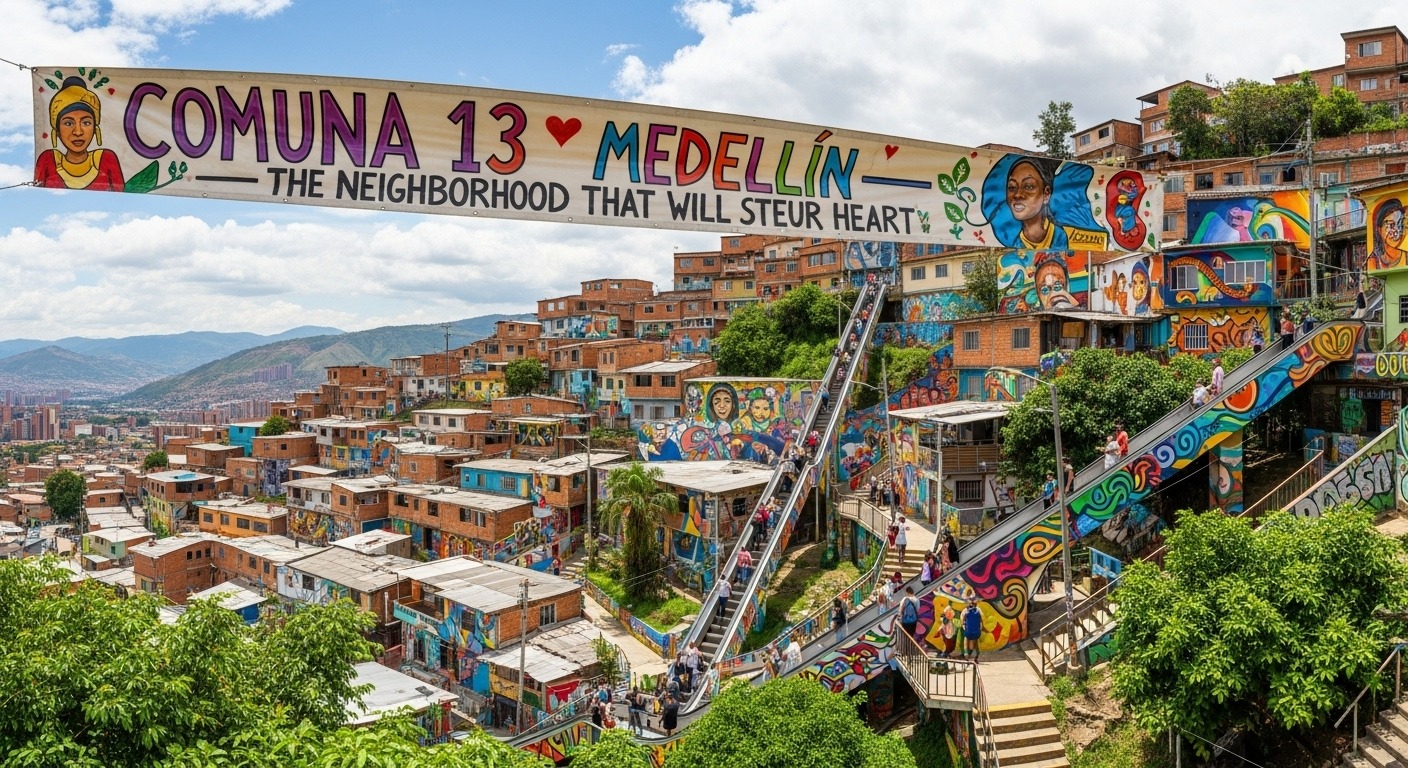
If you’ve ever looked up Medellin, you’ve probably seen pictures of bright murals climbing steep hillsides, dancers spinning and flipping in the streets, and long, orange outdoor escalators winding through a dense neighborhood. Welcome to Comuna 13 – a place that looks like it leapt straight out of an Instagram reel. But here’s the secret: it’s not just about the visuals. This neighborhood tells one of Medellin’s most powerful stories of survival, transformation, and community resilience.
We’ve walked these streets countless times—alone, with friends, on group tours, and with private guides. Every visit offers something new: a mural you missed last time, a dancer performing an incredible flip, or a local sharing a story that gives color to every painted stair. And trust us: going with a local guide is the difference between seeing art and truly understanding it.
So if you’re planning your trip to Medellin, here’s the ultimate guide to Comuna 13 in 2025—complete with history, tips, safety advice, and all the information you need to make your visit unforgettable.
Why Comuna 13 is More Than Just a Pretty Face
It’s easy to look at Comuna 13 and think it’s just a vibrant tourist hotspot. But behind the colors lies a neighborhood with a story that will both break your heart and lift your spirits.
In the 1960s and 70s, families fleeing violence in Colombia’s countryside began building homes along the steep hills of San Javier. They created a dense, unplanned neighborhood on the edge of Medellin. By the 1980s and 90s, the area had become a strategic point for drug trafficking and was caught in the crossfire between guerrillas, paramilitaries, and the state.
The most infamous chapter came in October 2002 with Operation Orion, a massive military offensive that aimed to remove guerrilla presence. While it did achieve that goal, it also resulted in civilian deaths and forced disappearances—a dark time that left lasting scars on the community.
But Comuna 13 didn’t surrender to fear. Instead, its residents turned to art, music, hip-hop, and education. They reclaimed public spaces, telling their stories through murals, dance, and graffiti. Today, every corner of the neighborhood speaks of resilience, creativity, and hope.
Walking Through History – What You’ll See
Stepping into Comuna 13 feels like walking into a living gallery. Every mural is a page of history, every stairway tells a story, and every performance adds rhythm to the air.
- Murals That Speak: The painted walls cover everything – from tales of past conflicts to messages of unity and hope. Look closely, and you’ll notice subtle references to local heroes, community leaders, and historic events.
- Street Performers: Dancers, rappers, and musicians bring energy to the streets. Some perform daily, some spontaneously, but all contribute to the vibrant culture that defines Comuna 13.
- Local Vendors and Cafés: Between stairways, you’ll find small cafés, juice stands, and vendors selling snacks or handmade crafts. Stop and taste a local empanada or a fresh fruit juice – it’s part of the experience.
- Scenic Viewpoints: Several rooftops and open terraces offer breathtaking views of Medellin’s sprawling urban landscape. The contrast between the colorful neighborhood and the city below is unforgettable.
The Outdoor Escalators—Medellin’s Engineering Marvel
One of Comuna 13’s most iconic features is the open-air escalators. Installed in 2011, these escalators transformed the daily life of residents who previously had to climb steep stairs for hours.
Not only do they make the neighborhood more accessible, but they’ve also become a symbol of progress, innovation, and community empowerment. Riding the escalator is a must—it gives you a unique perspective of the colorful hillside and the life unfolding around it.
When to Visit Comuna 13
Timing is key if you want to enjoy Comuna 13 at its best:
- Early Morning (before 10 a.m.): The streets are calm, the light is soft, and you might even catch artists working on new murals. Perfect for photography and peaceful exploration.
- Late Afternoon (after 4 p.m.): Golden hour casts a warm glow over the murals, and the neighborhood feels more relaxed. A perfect time for panoramic city views.
- Weekdays vs. Weekends: Weekends and holidays bring large crowds. Visit on a weekday to enjoy the area without bumping into too many tour groups.
- Night Visits: Night tours exist and can be magical – live music, lights over the city, and a different vibe. But don’t wander alone; stick to main paths or a trusted guide.
Getting There—The Journey is Part of the Fun
Comuna 13 is easy to reach, and the trip itself gives you a glimpse of Medellin’s urban life.
- By Metro: Take Line A to San Javier (the final stop) and walk uphill about 15–20 minutes. Expect narrow streets, local shops, and a real neighborhood vibe.
- By Taxi or Uber: About $3–6 USD depending on where you start. Tip: search for “Graffitour 13” rather than “Escaleras Eléctricas” to reach the entrance properly.
- Tours: Free walking tours, group tours, and private guides are excellent ways to explore safely while learning the stories behind the art.

Safety—What You Really Need to Know
Let’s be honest: Comuna 13 wasn’t always safe. But today, it’s a welcoming and vibrant neighborhood.
- Stick to the main paths, escalator routes, and well-populated areas.
- Daylight visits are ideal. Nighttime exploration without a guide isn’t recommended.
- Locals are friendly and used to tourists, and many visitors – solo travelers, families, and couples – explore safely every day.
A tip from experience: respect the space, smile, engage with locals, and you’ll be rewarded with stories, laughter, and incredible memories.
Tours—Guided Experiences vs. Solo Exploration
You can explore Comuna 13 on your own, and many travelers do. But here’s the secret: a local guide transforms the visit.
- Guided Tours: Provide historical context, show hidden murals, and explain symbols in street art. You’ll leave with a much deeper understanding than photos alone could offer.
- Solo Visits: Fine if you’re experienced and confident, but you might miss some of the nuances that make Comuna 13 extraordinary.
Options range from private tours with hotel pickup to group tours with a local guide. Either way, you’ll gain insight into the community that no Google search could provide.

The Art—Murals That Tell a Story
Comuna 13 is one of the most photographed neighborhoods in the world, but the murals are more than Instagram fodder. They are visual history lessons:
- Resistance and Survival: Some murals depict the struggles of residents during the era of guerrilla conflict.
- Celebration and Pride: Others showcase community heroes, music, and dance, emphasizing the neighborhood’s transformation.
- Symbolism in Detail: Look closely at the colors, the faces, and even the stairs themselves—many murals incorporate the shape and slope of the neighborhood into the art.
Every corner offers something to discover, making it impossible to see everything in just one visit.
Local Culture—Beyond the Murals
Comuna 13 is not just about street art—it’s about living culture.
- Hip-Hop and Dance: Local crews perform daily, and sometimes you’ll stumble upon impromptu battles between dancers.
- Graffiti Workshops: Some tours offer visitors the chance to create their own piece of street art under guidance from local artists.
- Music and Rhythm: From rap to salsa, the music of Comuna 13 echoes through the streets, bringing vibrancy to every corner.
Engage with locals, and you’ll find stories of resilience, humor, and pride that no photograph could capture.
Food and Drinks – A Taste of the Neighborhood
Street food in Comuna 13 is a must. Expect:
- Empanadas: Crispy, golden, and stuffed with meat or cheese.
- Fresh Juices: Tropical fruits like guanabana, mango, and passion fruit are served cold and refreshing.
- Arepas: Colombia’s staple corn cakes, grilled and topped with cheese or butter.
Stop and eat. These snacks are as colorful and vibrant as the neighborhood itself.

The Escalator Experience
Riding the escalators isn’t just a convenience—it’s an experience. As you ascend:
- Watch children and locals move along the street below.
- Take in the murals on either side—some are only visible from this vantage point.
- Enjoy the unusual combination of cityscape views and street-level immersion.
It’s engineering, art, and culture all rolled into one ride.
Photography Tips—Capture the Magic
- Golden Hour: Late afternoon provides the best lighting for murals and city views.
- Angles Matter: Try shooting upwards from the bottom of stairways or downwards from rooftops for dramatic perspective.
- Engage with People: Locals often pose with smiles, and dancers mid-flip and street vendors in action add life to photos.
More Tips
- Wear comfortable shoes—steep streets and stairs are everywhere.
- Bring cash—many vendors don’t accept cards.
- Stay hydrated—Medellin is at 1,500 meters, and you’ll climb a lot.
- Respect local customs and spaces. Ask before photographing people closely.

Final Thoughts
Comuna 13 is a neighborhood of contrasts: steep hills, bright murals, the echoes of a turbulent past, and the music of a hopeful present. It’s touristy, yes, but it’s also real, vibrant, and alive.
Visit with curiosity, respect, and an open heart, and you’ll leave with:
- Incredible photos
- Stories you’ll never forget
- A sense of Medellin’s resilience and creativity
- Maybe even a few dance moves of your own
Comuna 13 isn’t just a neighborhood—it’s a living testament to the power of community. And once you’ve been here, Medellin will feel different—brighter, warmer, and full of life.