
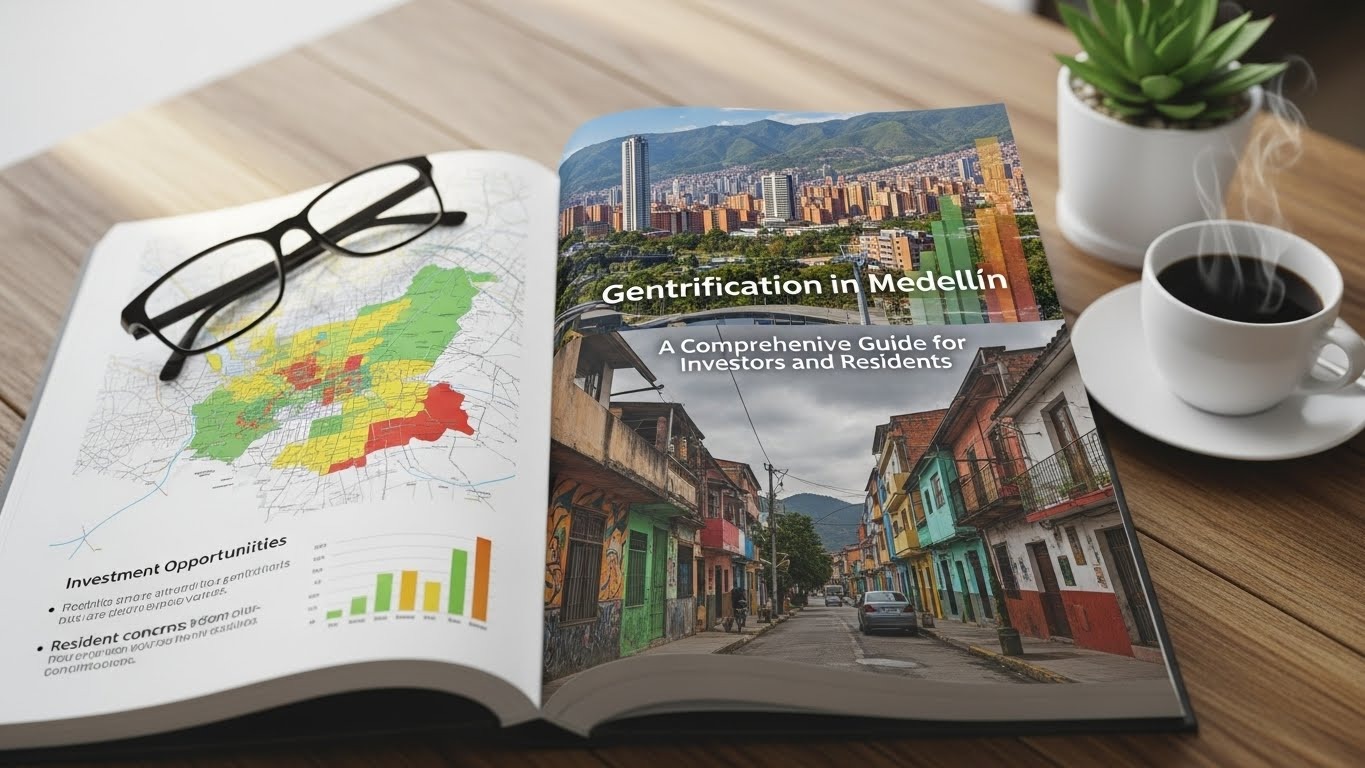

Medellín is a city that is constantly rewriting its own story.
For decades, the world associated it with violence, instability, and fear, but the Medellín of today is something entirely different. It is a place filled with creativity, optimism, and reinvention. It is a city where cable cars rise over brick-colored hillsides and modern trams glide through walkable districts. Cafés buzz with digital nomads, families stroll beneath jacaranda trees, and developers race to launch the next big real-estate project.
And yet — beneath this vibrant exterior lies a quieter, more complicated reality.
As thousands of foreigners arrive each year, bringing new income streams and new housing demands, many long-time residents are finding themselves priced out of the very neighborhoods they have called home for generations. Streets lined with mom-and-pop bakeries are slowly being replaced by sleek cocktail bars. Modest rentals once affordable for locals are converted into high-yield Airbnb units. And entire barrios are experiencing a level of transformation so rapid that many locals barely recognize them anymore.
This process is known as gentrification, and in Medellín, it is unfolding at a pace few people anticipated.
This article takes a deep, honest look at what is happening.
It explores how short-term rentals, foreign investment, and high-end projects like the sleek, modern Morph Medellín developments are reshaping the city. It examines the economic opportunity, the cultural loss, and the moral dilemma facing investors and residents alike.
It is not an article meant to scare you — nor is it an article meant to sell you anything.
Instead, it is a genuine attempt to explain the forces shaping modern Medellín, so that both locals and foreigners can make informed, ethical, and responsible decisions about the future of this remarkable city.
The Allure of Medellín: A City in Transformation
Medellín has always had a magnetic pull — but never more so than in the last decade. It is a city that thrives on reinvention. The people of Medellín, known as paisas, have rebuilt their city time and time again, fuelled by resilience, innovation, and a warm sense of community.
This reputation for transformation is precisely what attracts:
- digital nomads
- remote workers
- tourists
- retirees
- investors
- entrepreneurs
- people seeking a new lifestyle
And they arrive with enthusiasm — often falling in love with the city within days. The eternal-spring climate, the friendliness of the people, the low cost of living relative to Western standards, and the vibrant café and restaurant scene create a perfect storm of appeal.
But this influx is not only cultural — it is financial.
Foreigners often earn in dollars or euros, but they spend in pesos. And this creates a powerful imbalance.
Morph Medellín: A Symbol of Modern Investment
To understand Medellín’s transformation, one must look at projects like Morph Medellín, a brand of high-end, short-term rental condominiums designed specifically with foreign investors in mind.
These buildings are stunning.
Rooftop pools overlook the city.
Co-working spaces buzz with remote workers.
Security personnel guard the 24/7 lobbies.
Units are delivered fully furnished and “Airbnb-ready.”
They are marketed not just as homes, but as assets — turnkey income machines that promise high occupancy, premium nightly rates, and seamless property management.
Morph is not the only project of its kind, but it is one of the clearest examples of the wave of development reshaping Medellín. It represents the aspirations of modern investors, but also the concerns of many locals who feel increasingly excluded from what their city is becoming.
And this brings us directly into the heart of the discussion:
gentrification and the forces accelerating it.

The Engine of Change: Short-Term Rentals and Foreign Investment
Gentrification in Medellín is complex, but the most powerful drivers of change are:
1. Short-term rentals (especially Airbnb)
2. Large volumes of foreign investment
3. New luxury developments designed for non-residents
These factors combine to reshape the city’s housing market in ways that are both beneficial and harmful.
Let’s break this down.
The “Airbnb Effect” on Medellín
Short-term rentals have revolutionized the global tourism economy, and Medellín has been one of the biggest beneficiaries.
Digital nomads love the city.
Tourism has exploded.
Foreign currencies flow in daily.
But the impact on the housing market has been dramatic.
Here’s how the Airbnb cycle unfolds in Medellín:
Step 1 — More Foreign Visitors Arrive
Visitors want short-term stays in modern, safe, walkable neighborhoods.
Most choose El Poblado and Laureles.
Step 2 — Short-Term Rentals Offer Higher Profit
A landlord might earn:
- $350–$450 USD/month on a long-term local rental
versus - $60–$150 USD/night on Airbnb
The difference is enormous.
Step 3 — Owners Convert Properties
Units previously rented to locals are taken off the long-term market.
Step 4 — Housing Supply Shrinks
Local families now compete for fewer available apartments.
Step 5 — Rents Increase Rapidly
In some areas, rents have increased 30–80% in just a few years.
Step 6 — Locals Move Out
Families relocate to cheaper neighborhoods or nearby municipalities.
This process is not unique to Medellín — it’s happening in Lisbon, Barcelona, Tulum, Mexico City, and dozens of other cities. But in Medellín, the effect is especially intense because the average local salary is low compared to foreign income levels.
What might be “affordable” for a foreign visitor is completely out of reach for a Colombian earning in pesos.
The New Wave of Real Estate Projects
Developers in Medellín have learned a profitable formula:
Build high-end units → Sell them to foreigners → Market them as Airbnb investments
Many new buildings include:
- rooftop pools
- coworking spaces
- gyms
- lobby lounges
- dedicated Airbnb management services
- hotel-style amenities
These projects are not designed for long-term local residents.
They are designed for one thing: short-term rental profitability.
This is why prices are often listed in U.S. dollars instead of pesos — a clear signal about the target buyer.
Developers benefit. Investors benefit. Tourists benefit.
But locals?
That’s more complicated.
A Tale of Two Cities: El Poblado vs. the “Real” Medellín
El Poblado has become the poster child of Medellín’s transformation. It is the wealthiest, safest, and most touristic district in the city. Streets are filled with cafés, craft breweries, yoga studios, language schools, boutique hotels, and international restaurants.
Foreigners love it.
Investors love it.
Developers love it.
But many Colombians will tell you that El Poblado is not Medellín.
It’s an island — a polished, insulated bubble floating above the everyday reality of the city.
As El Poblado grows more luxurious, more expensive, and more international, the pressure spills into surrounding neighborhoods.
**Laureles is next.
Belén is changing.
Envigado is shifting.
Sabaneta is accelerating.**
As foreigners move outward in search of slightly cheaper housing or a more “authentic” lifestyle, they unintentionally carry gentrification with them.
This raises an important question:
What happens to Medellín’s identity if every central neighborhood eventually transforms into a tourist-friendly zone?

The Human Cost of Gentrification
Gentrification is often talked about in terms of rent increases and investment yields, but the real impact is human. It affects families, traditions, and the emotional fabric of the city.
Below are the three hidden consequences that rarely make it into glossy real-estate presentations.
1. Displacement of Long-Term Residents
Imagine living your entire life in a neighborhood where:
- you know every neighbor by name
- your children go to school nearby
- your parents live down the street
- your rent has been stable for years
Now imagine being told your rent is doubling — not because the building improved, but because tourists are willing to pay more per night than you pay per month.
This is the quiet story unfolding across Medellín.
Families that once felt rooted are suddenly uprooted.
Communities that felt stable now feel fragile.
Young adults who hoped to move out cannot afford to stay nearby.
This is not a dramatic overnight eviction — it is a slow, steady push.
2. Cultural Erosion
Gentrification doesn’t just change buildings — it changes lifestyles.
Here’s what cultural erosion looks like on the ground:
- local bakeries turned into sleek brunch spots
- corner tiendas replaced by trendy wine bars
- traditional restaurants replaced by international fusion cuisine
- street vendors pushed out to “clean up” sidewalks
- older residents outnumbered by tourists with rolling suitcases
The irony is painful:
People come to Medellín because it feels authentic…
and then the demand they create slowly destroys that authenticity.
3. Rising Inequality and Social Tension
When wealthy foreigners live next to lower-income Colombian families, the contrast becomes stark.
Foreigners may pay:
- 8–15 million COP in rent
while locals pay: - 1.5–2.5 million COP for the same unit a few years earlier
This divide affects:
- access to housing
- access to services
- local prices
- the overall sense of belonging
Inequality breeds resentment, even when no one intended harm.
This social tension is subtle, but growing.
The Investor’s Dilemma: Profit vs. Responsibility
If you are a foreign investor, you are part of this story — whether you realize it or not.
This doesn’t mean you’re “doing something wrong.”
It simply means you should understand the role you play in the city’s transformation.
Let’s examine how an ethical, responsible investor can approach the Medellín market.
Understanding the Market Context
Before investing, ask yourself:
- Who lived here before?
- Is this neighborhood already experiencing displacement?
- Are short-term rentals legal here?
- Is the local community benefiting from this investment?
- Am I pushing the market in a direction that excludes locals?
Knowledge is the first step toward ethical investing.
How to Invest Responsibly in Medellín
Ethical investment is possible — and many investors genuinely want to do the right thing.
1. Consider Long-Term Rentals
This is perhaps the most meaningful choice you can make.
Instead of converting your unit to Airbnb, rent long-term to local residents.
Benefits:
- stable income
- lower management fees
- lower occupancy risk
- zero legal risk
- contributes to neighborhood stability
- prevents displacement
This model keeps housing within reach for Colombians.
2. Support Local Businesses
If you do operate a short-term rental, you can still contribute meaningfully to the community by recommending:
- local restaurants
- small family-owned stores
- local tour guides
- local markets
- community-based activities
- Colombian-owned cafés and services
Money spent locally stays local.
3. Choose Developers Who Support the Community
Some developers are starting to integrate:
- community programs
- affordable housing components
- environmental initiatives
- neighborhood preservation commitments
Supporting these projects sends a message — and shapes the future of development.
The Role of Government Regulation
Medellín is currently debating stronger policies on short-term rentals. Possible regulations include:
- limiting the number of Airbnb units per building
- stricter licensing requirements
- large fines for illegal rentals
- restrictions on Airbnb in residential zones
- additional taxes to support affordable housing
For investors, regulation is both a risk and a stabilizing force.
Responsible regulation can help protect the city’s long-term housing stability — and protect your investment from a speculative bubble.

FAQ:
Below are the most common questions foreigners ask about gentrification and investment in Medellín.
Is it safe to invest in Medellín?
Yes — if you invest wisely, and in the right neighborhoods.
Medellín has become significantly safer over the past decades, and foreign investment is welcomed. Just remember to work only with reliable attorneys and real-estate professionals.
Which neighborhood is best for investment?
It depends on your goals:
- El Poblado → best for high-end short-term rentals, but heavily gentrified
- Laureles → more local feel, rising quickly, very popular
- Envigado → more community-oriented, great long-term investment
- Sabaneta → growing rapidly, more affordable
- Belén → increasingly popular with digital nomads
Each area has its own identity and growth trajectory.
How much can I earn from rentals?
Short-term rentals have higher yields but higher risk.
Long-term rentals provide stability and lower risk.
Returns depend on:
- neighborhood
- occupancy
- management fees
- seasonality
- regulatory changes
Never invest based solely on projected Airbnb earnings.
Can foreigners legally buy property in Colombia?
Yes.
Foreigners enjoy the same property rights as Colombians.
You do not need residency to buy real estate, but you should always hire a trusted lawyer to complete the due diligence process.

Conclusion:
Medellín is a city full of opportunity. It is a place where innovation collides with tradition, where neighborhoods tell stories, and where communities carry the warmth and resilience of generations.
But it is also a city undergoing one of the fastest urban transformations in Latin America — a transformation that is reshaping not only buildings, but lives.
Gentrification is not a simple issue.
It is neither entirely good nor entirely bad.
It brings economic growth, but also cultural erosion.
It creates opportunity, but also displacement.
It attracts investment, but challenges identity.
As Medellín continues to evolve, the responsibility is shared by everyone — residents, politicians, developers, investors, and visitors. The goal must be balance: a Medellín that continues to grow and modernize without losing its soul.
If you are an investor, you have the power to help shape a future that is both prosperous and fair.
If you are a resident, your voice matters in advocating for policies that protect communities.
And if you are simply someone who loves Medellín, then this story is yours too.
The question now is not whether Medellín will change — but what kind of Medellín we want to build.
The hope is simple:
That the city’s transformation becomes an opportunity for everyone, not a privilege for a few.
That Medellín remains not only a great place to visit or invest in, but a great place to live.
That its culture, its people, and its spirit remain at the center of its future.
Medellín has rewritten its story before.
And with awareness, compassion, and responsible action, it can write the next chapter in a way that honors both its past and its potential.

Leave a Reply