
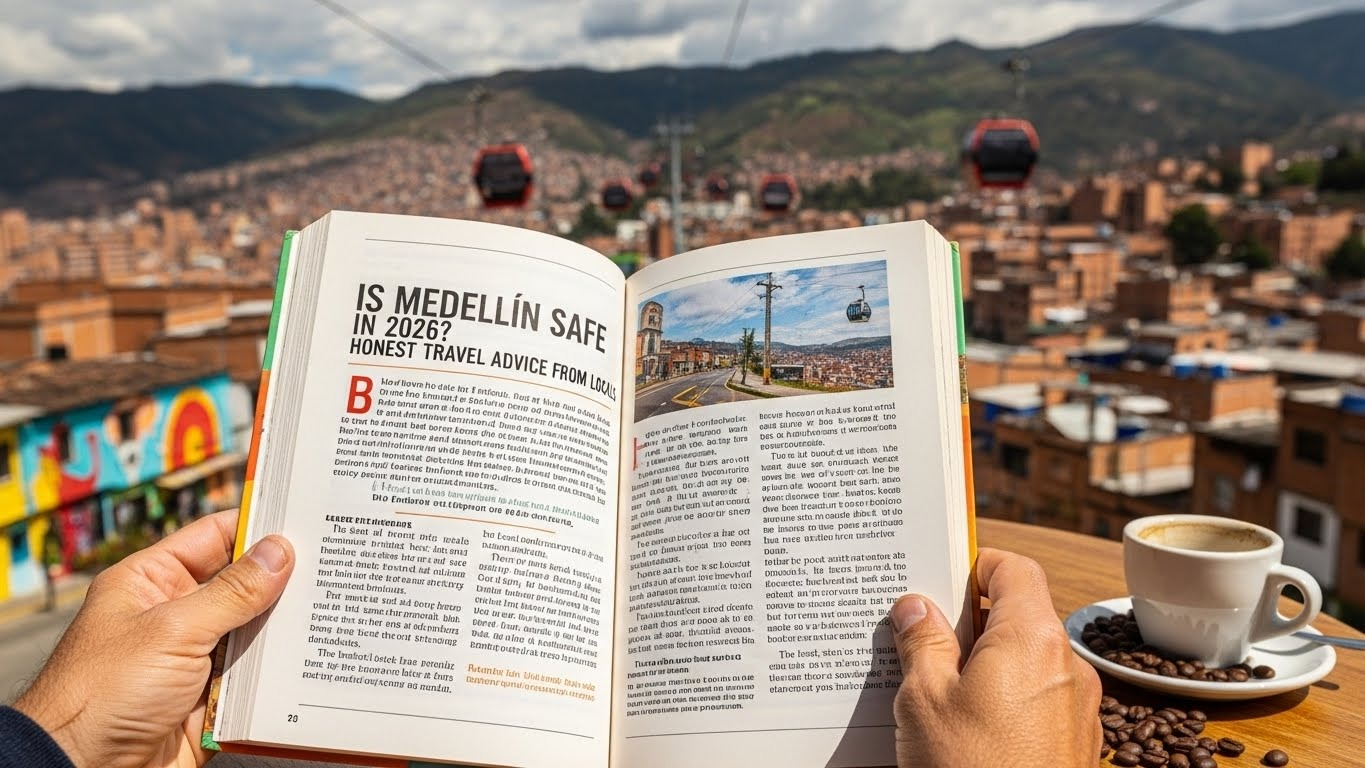
Medellín is not a city you simply visit.
It’s a city you feel.
You feel it in the warm air that never seems to change, in the rhythm of music drifting from open windows, and in the way strangers smile at you as if you already belong. But before most travelers ever experience that warmth, they pause at one unavoidable question:
Is Medellín safe?
In 2026, this question still lingers in the minds of travelers, digital nomads, retirees, and backpackers alike. Some ask it with fear. Others ask it with curiosity. And many ask it because Medellín’s past still echoes louder online than its present.
The honest answer is not a simple yes or no.
Medellín is safer than its reputation suggests—but not as effortless as some travel influencers make it seem. It is a city that rewards awareness, respect, and humility. And when you approach it the right way, it offers something rare: a sense of connection that stays with you long after you leave.
A City That Refused to Stay Broken
To understand safety in Medellín, you must first understand its story.
This city has lived through extremes. Decades ago, it was known globally for violence, instability, and fear. Entire neighborhoods were cut off from opportunity. Families lived under constant uncertainty.
But Medellín did not accept that fate.
Through community effort, innovation, and an unshakable sense of pride, the city reinvented itself. Cable cars connected isolated neighborhoods. Libraries rose where violence once ruled. Art replaced silence. Music replaced fear.
Today, Medellín is a symbol of transformation — not because it erased its past, but because it learned from it.
A local once said:
“Medellín doesn’t hide its scars. We turned them into lessons.”
That mindset still shapes how the city functions today.
What Safety Really Means in Medellín
Safety in Medellín is not about avoiding the city.
It’s about understanding it.
Just like New York, London, Paris, or Rome, Medellín has areas that feel calm and welcoming, and others that require caution. The difference is that Medellín expects visitors to meet it halfway — with awareness rather than fear.
Neighborhoods Matter
Some areas naturally attract travelers:
- El Poblado – lively, modern, full of cafes, hotels, and nightlife
- Laureles – quieter, local, relaxed, and walkable
- Envigado – residential, friendly, and community-focused
These neighborhoods feel safe because people are out walking, eating, laughing, and living life openly. Presence creates safety.
Other areas, particularly parts of the city center or unfamiliar neighborhoods late at night, require more caution. Not because danger is guaranteed — but because unpredictability increases.
A Medellín taxi driver once said:
“This city is friendly, but it’s still a big city. Respect it like one.”
That advice applies everywhere.

The Most Common Risks Travelers Face
Most travelers who run into trouble in Medellín don’t experience violent crime. Instead, issues tend to fall into familiar categories found in many global cities.
Petty Theft
Pickpocketing can happen in crowded areas, public transport, or busy nightlife zones. Phones left on tables. Bags hanging loosely. Wallets in back pockets.
Locals follow a simple rule:
If it’s valuable, don’t make it visible.
This isn’t paranoia. It’s habit.
Tourist Targeting
Foreigners, especially first-time visitors, may be overcharged or approached by people offering deals that sound too good to be true.
A seasoned traveler once shared:
“The city felt safe — but the moment I acted distracted, I felt watched.”
Awareness is protection.
Nightlife-Related Risks
Medellín’s nightlife is electric. Music spills onto the streets. Bars stay full until late. People dance like tomorrow doesn’t exist.
But locals will tell you clearly:
- Go out with people you trust
- Never leave drinks unattended
- Avoid isolating yourself late at night
These are not Medellín-specific warnings. They are urban realities.
The Truth About Scopolamine (And Why Locals Talk About It)
One topic often discussed quietly—but seriously—is scopolamine, sometimes called “Devil’s Breath.”
While incidents are rare compared to the volume of visitors Medellín receives, locals speak openly about it because awareness prevents harm.
The most important lessons locals share are simple:
- Be cautious when meeting strangers, especially one-on-one
- Avoid bringing unfamiliar people back to your accommodation
- Trust discomfort — it exists for a reason
A local café owner explained it best:
“We don’t warn you because we’re scared. We warn you because we care.”
Fear spreads panic. Information creates safety.
Transportation: One of Medellín’s Strongest Points
Medellín’s public transport system is one of the cleanest and most organized in Latin America.
The metro is modern, efficient, and respected by locals. You’ll notice people lining up properly, offering seats, and keeping the system clean. This culture of respect adds to its safety.
Ride-share services are widely used, especially at night, because they offer tracking and accountability. Locals use them too.
A traveler once noted:
“I felt safer using transport in Medellín than in some cities back home.”
That sentiment is common.

How Locals Stay Safe (And How You Can Too)
Locals don’t walk around scared — but they do walk around aware.
Here’s what they do instinctively:
- Phones stay secure, not waved around
- Jewelry stays minimal
- Bags stay close to the body
- Routes are chosen with lighting and activity in mind
One phrase you’ll hear often is “no dar papaya.”
It means: don’t make yourself an easy target.
It’s not about suspicion. It’s about self-respect.
Experiences from Real Travelers
Many visitors arrive nervous—and leave surprised.
A solo traveler shared:
“I expected danger. Instead, I found kindness. People helped me, laughed with me, and looked out for me.”
Another visitor said:
“The city taught me how to travel better—not fearful, just smarter.”
Of course, not every experience is perfect. Some travelers feel uncomfortable moments. Some learn lessons the hard way. But most leave with a deeper understanding of urban travel—and a fondness for Medellín.
Living Like a Guest, Not a Consumer
One reason some travelers struggle in Medellín is mindset.
Medellín is not a playground.
It is someone’s home.
When visitors treat the city with humility—learning basic Spanish, greeting people, and respecting local culture—they are welcomed warmly.
A local guide once said:
“When you walk slowly, smile, and listen, Medellín opens up.”
Safety is social as much as physical.
Health, Comfort, and Daily Life
Beyond crime, daily well-being in Medellín is generally excellent.
- The climate is mild year-round
- Healthcare is accessible and modern
- Food is fresh and affordable
- Outdoor spaces encourage movement
Most travelers feel comfortable within days. The altitude is manageable, and the pace of life feels balanced.
Medellín invites you to slow down—and slowing down often leads to safer choices.
Why People Fall in Love With Medellín Anyway
Despite warnings, headlines, and online debates, people keep coming. And many keep returning.
Why?
Because Medellín feels alive.
Because strangers greet you.
Because music is everywhere.
Because mountains surround the city like open arms.
Because resilience lives in every corner.
A long-term visitor said:
“Medellín taught me that safety isn’t the absence of risk—it’s the presence of connection.”

So, Is Medellín Safe in 2026?
Yes—if you travel with awareness, respect, and common sense.
Medellín is not dangerous by default.
It is not carefree either.
It is honest.
It gives back what you bring.
Bring curiosity, humility, and awareness — and Medellín will reward you with beauty, warmth, and unforgettable moments.
“Don’t come scared. Come respectful.”
“Listen more than you talk.”
“We are proud of this city. Treat it gently.”
Medellín does not ask you to be brave.
It asks you to be present.
And in 2026, for travelers willing to meet it halfway, Medellín is not just safe enough — it is deeply worth knowing.

Leave a Reply