
There are places in the world where weather dictates life.
And then there is Medellín.
In Medellín, the weather doesn’t control the day—it supports it. It encourages people to linger, to talk longer than planned, to sit outside without checking the forecast, and to walk without rushing. It wraps the city in a quiet agreement between nature and people: life here should be lived comfortably.
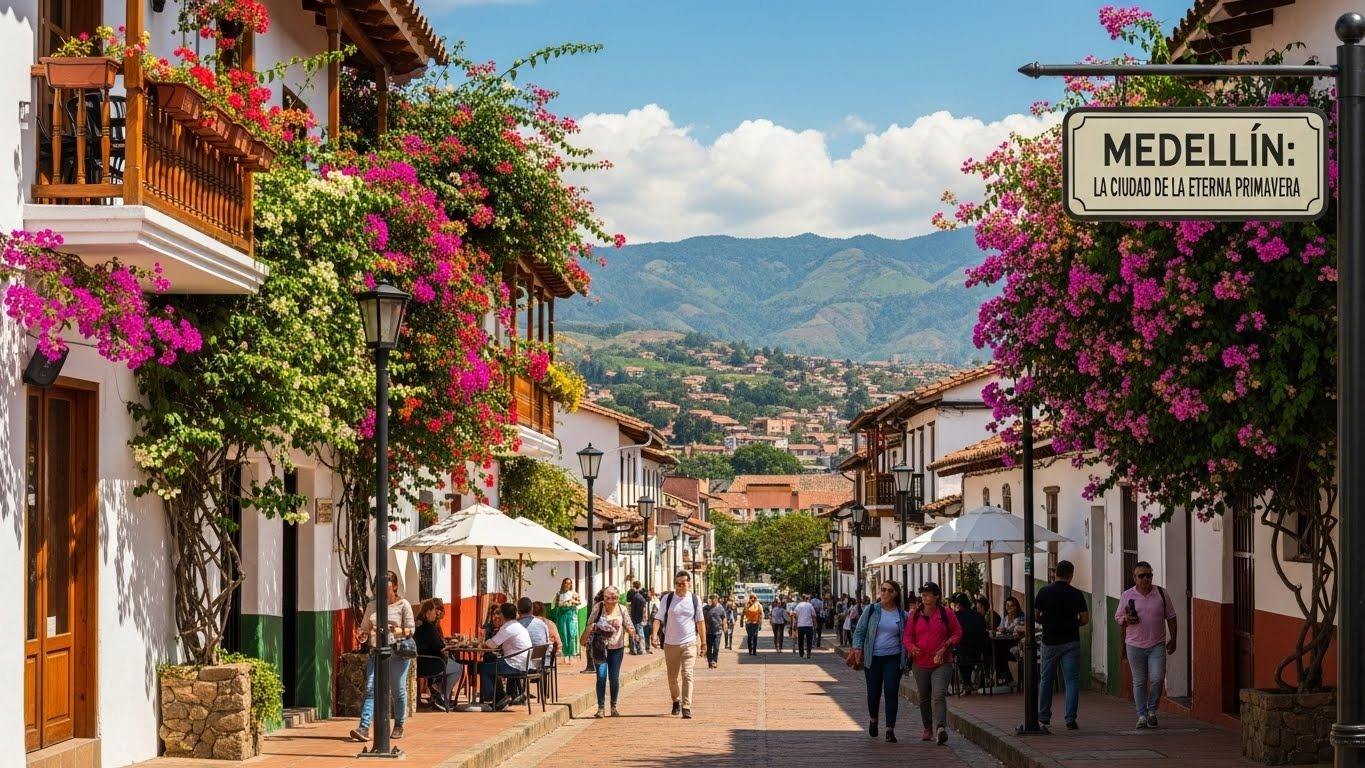
This is why Medellín is called “La Ciudad de la Eterna Primavera”—The City of Eternal Spring.
But the name is not just about temperature. It is about feeling. Rhythm. Renewal. And a deeply ingrained belief that life can stay balanced, even after hardship.
To understand why Medellín truly deserves this name, you must look beyond the numbers on a thermometer and into the daily lives of the people who breathe this spring air every day.
A Climate That Rarely Demands Attention
Medellín sits gently in a wide valley, cradled by green mountains that rise like guardians on all sides. Its elevation keeps the heat soft. Its proximity to the equator keeps the seasons consistent. The result is something rare — a climate that rarely interrupts life.
Days are warm without being exhausting. Nights cool down just enough to invite sleep. Rain arrives, refreshes the city, and leaves without drama.
Locals don’t obsess over weather apps. They don’t plan months around seasons. Jackets are optional. Umbrellas are casual companions, not necessities.
A local architect once said:
“Here, the weather doesn’t compete with your plans. It cooperates.”
That cooperation shapes everything.
When Spring Becomes a Way of Living
Spring is the season of growth, and Medellín never steps out of it.
Flowers bloom year-round. Trees never retreat into bare branches. Hills remain green even when rain slows. The city never feels dormant.
This constant growth influences the people.
Cafés spill onto sidewalks because they can. Conversations stretch because no one feels pushed indoors. Children play outside longer. Elderly neighbors sit on benches and watch the world pass by, not because they have nowhere else to go — but because the air invites them.
A visitor once wrote in a journal:
“I kept waiting for the season to change. It never did. Instead, I did.”
Morning in the City of Eternal Spring
Morning arrives gently in Medellín.
The sun doesn’t rise aggressively. It slides into the valley, touching rooftops, trees, and streets with soft light. Coffee begins to brew in homes and small neighborhood cafés. Street vendors roll out carts. Buses hum to life. Birds cut through the sound of traffic with surprising clarity.
You can walk early without a jacket. Without sweating. Without discomfort.
Morning here doesn’t shock the body awake.
It welcomes it.
A local teacher explained:
“Mornings feel kind here. They don’t rush you into being someone else.”

Afternoons Designed for Living, Not Escaping
In many cities, afternoons are something to endure. Heat pushes people indoors. Cold forces layers. Rain ruins plans.
In Medellín, afternoons feel usable.
People eat lunch slowly. Workers step outside during breaks. Friends meet without checking the temperature. Streets remain active, but not chaotic.
Spring afternoons don’t demand productivity. They allow balance.
A café owner once smiled and said:
“If the day feels good, why should life feel hard?”
That philosophy lives everywhere.
Evenings That Belong to Everyone
As the sun lowers behind the mountains, Medellín cools slightly — just enough to notice. This is when the city feels most alive.
Families walk together. Couples sit close on park benches. Music drifts from balconies and open bars. Food sizzles in street stalls. Laughter echoes without effort.
Evenings don’t signal retreat. They invite connection.
A street musician once said:
“We play outside because the weather listens.”
Spring evenings don’t rush anyone home. They ask people to stay.
The Mountains That Hold the Spring
Medellín’s mountains do more than decorate the skyline.
They regulate temperature, soften winds, and protect the valley from extremes. They make the city feel enclosed, grounded, and connected to nature even in the middle of urban life.
From above, Medellín looks like a garden woven into concrete.
Locals often speak of the mountains with affection, almost as if they were family.
“The mountains keep us calm,” one resident said.
“They remind us where we belong.”
Spring feels eternal because nature never steps away.
Flowers as Identity, Not Decoration
If spring had a symbol in Medellín, it would be flowers.
Not as decoration — but as heritage.
For generations, families in the surrounding regions have grown flowers, passing knowledge from grandparents to grandchildren. Flowers are tied to identity, pride, and survival.
The city celebrates this connection openly. Massive flower displays, handmade arrangements, and colorful parades honor both beauty and labor.
A flower farmer once explained:
“Flowers don’t rush. They grow when they’re ready. That’s how Medellín learned to heal.”
Spring here is earned — not assumed.
Eternal Spring and the City’s Emotional Climate
Medellín’s past was heavy. The city remembers it clearly. But it chose not to live there forever.
Eternal spring is not denial — it is resilience.
Spring represents renewal. And Medellín chose renewal again and again. Through education. Through community spaces. Through art. Through rebuilding trust.
A local guide said quietly:
“We learned that bitterness dries the soul. Spring keeps it alive.”
That mindset is felt in how people speak, how they welcome visitors, and how they move forward.

Why Visitors Feel Different Here
Many travelers arrive carrying tension. Tight schedules. Urban exhaustion. Mental noise.
Then something shifts.
Sleep comes easier. Breathing slows. Meals stretch longer. Smiles appear without effort.
One traveler said:
“I didn’t realize how tense I was until Medellín let me relax.”
Spring doesn’t heal aggressively.
It allows space for healing to happen naturally.
A City Built for Walking and Watching
Because the weather allows it, Medellín invites movement.
People walk. Sit. Pause. Observe.
Public spaces feel intentional — not rushed through. Parks remain active. Streets stay social. Life unfolds outdoors.
A local writer once noted:
“When the weather is kind, people become kind too.”
Spring changes behavior.
Eternal Spring and Creativity
Creativity thrives in comfort.
Artists paint murals without fighting the elements. Musicians perform outdoors year-round. Writers sit in open cafés. Designers draw inspiration from constant color.
Spring feeds imagination.
A street artist shared:
“You can’t rush art when the city tells you to breathe.”
Medellín’s creative energy flows directly from its climate.
Food Tastes Better in Spring
Eating outdoors is not a special occasion here — it’s everyday life.
Fruit tastes brighter. Coffee feels richer. Meals feel social, not rushed.
Food becomes an experience rather than fuel.
A local chef said:
“Good weather teaches you to taste slowly.”
Spring changes how people eat — and why.
Why People Stay Longer Than Planned
Ask travelers how long they planned to stay in Medellín — and how long they actually stayed — and you’ll often hear laughter.
Days stretch. Weeks soften. Departures get postponed.
Not because Medellín traps people — but because it removes urgency.
An expat once admitted:
“Every time I tried to leave, the city asked me what I was rushing back to.”
Spring makes waiting feel reasonable.
Eternal Spring in a Modern City
In 2026, Medellín continues to grow.
New buildings rise. Technology advances. Tourism increases. But the city guards its balance carefully.
Green spaces remain protected. Community life stays central. Public areas remain accessible.
Spring here is preserved, not exploited.
A city planner once said:
“Progress shouldn’t feel colder.”
Medellín believes that deeply.
Why the Name Endures
Medellín could have chosen a slogan.
It didn’t.
The name “City of Eternal Spring” came naturally — because people felt it before they said it.
Spring represents:
- Balance
- Renewal
- Growth without pressure
- Warmth without excess
Medellín embodies all of it.
A local teacher summed it up perfectly:
“Spring means believing tomorrow can be better — and living like it.”

Final Reflection
Medellín is called “The City of Eternal Spring” not because the temperature stays mild — but because the city chose renewal over resentment, balance over extremes, and warmth over bitterness.
Spring here is not a season.
It is a decision.
A decision to grow again.
A decision to stay open.
A decision to live gently.
“Spring doesn’t ask permission to return,” a local once said.
“Neither did Medellín.”
And that is why the name fits — not poetically, but truthfully.

Leave a Reply